Sign up to our newsletter!
What Is HOS-5™?
It is a physician-developed systems-health framework created by Dr. Omatseye Edema that helps people better understand the major biological systems influencing how they feel, function, recover, perform, and age.
We are increasingly tired, ache from inflammation, overstimulated, under-recovered, sedentary, metabolically unhealthy, sleep deprived, hormonally strained and chronically stressed.
Aren't we?
And many people feel physically and mentally unwell long before traditional medical tests identify clear disease or place them in the generally accepted "abnormal lab range."
They seek help and may be told:
- “Your labs are normal.”
- “You’re just getting older.”
- “You need to reduce stress.”
- “Everything looks fine.”
Modern medicine is extraordinarily effective at diagnosing and treating established disease. It has transformed outcomes in areas such as infectious disease, trauma, surgery, critical care, cardiovascular disease, and cancer.
Yet many people spend years feeling tired, under-recovered, metabolically unhealthy, physically deconditioned, hormonally strained, overweight, or less resilient long before a diagnosable disease develops. Others continue to struggle with function, energy, recovery, and quality of life even after a diagnosis has been made and appropriately treated.
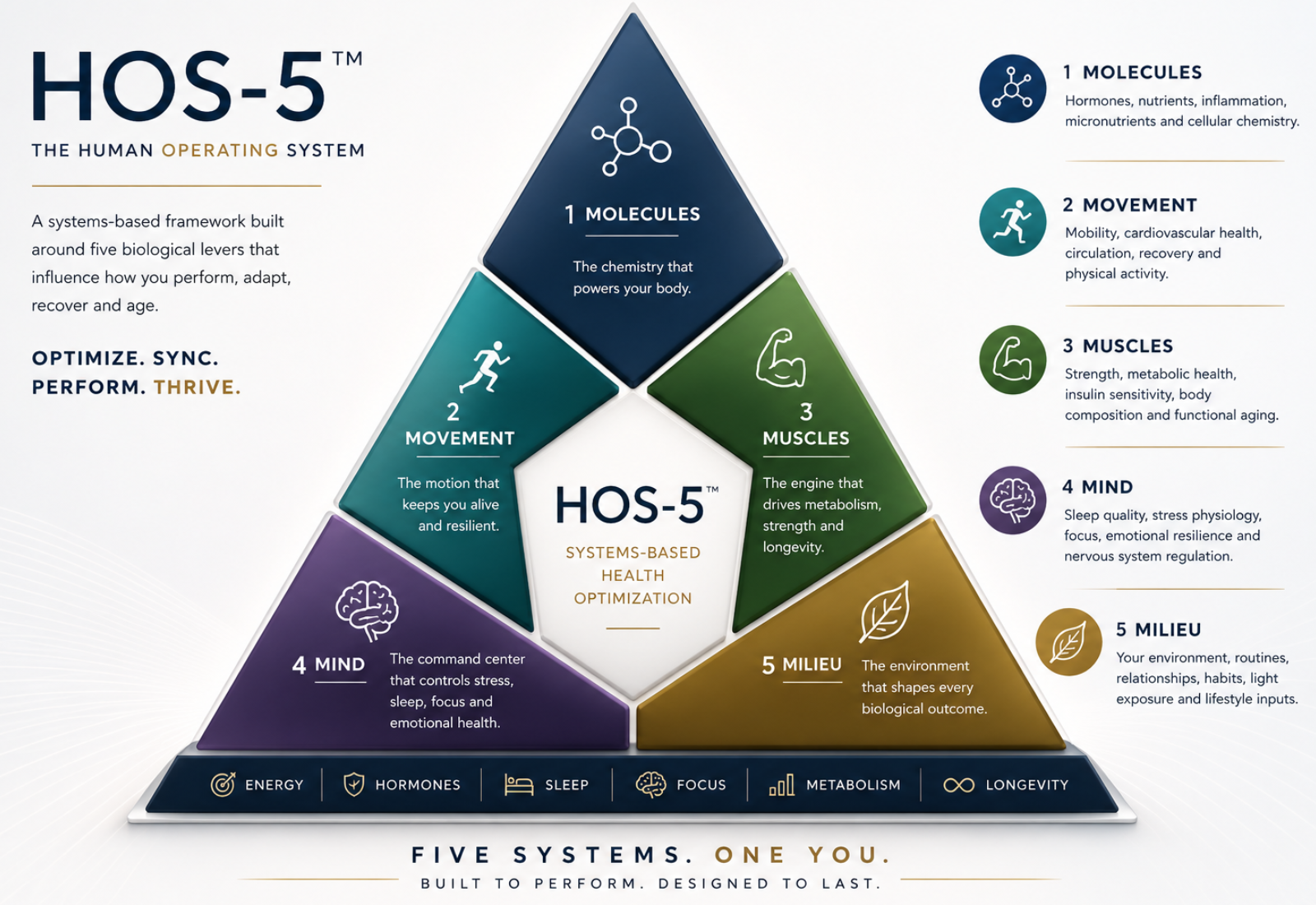
HOS-5™ was developed to help address this gap by providing a structured systems-health framework that works alongside rigorous medical assessment, laboratory testing, imaging, and evidence-based treatment to identify physiological strain, system imbalance, and opportunities for improving function across five interconnected biological domains: Molecules, Movement, Muscles, Mind, and Milieu. This creates a better understanding of how multiple physiological systems interact to influence how people feel, function, recover, perform, and age.
HOS-5™ recognizes that health exists on a continuum rather than as a simple distinction between being "healthy" and "sick." By combining systems-based assessment with appropriate medical evaluation, laboratory testing, imaging, and evidence-based interventions, the framework seeks to identify physiological strain, resilience deficits, and system imbalance early, while also supporting a more integrated understanding of established medical conditions.
In other words, modern medicine excels at answering the question:
"What disease does this person have?"
HOS-5™ complements this by asking:
"How well is this person's biological system functioning?"
These are related questions, but they are not the same question.
- A person may not have diabetes yet still have worsening insulin resistance.
- They may not have heart disease yet still have declining cardiorespiratory fitness.
- They may not meet criteria for a sleep disorder yet still be chronically under-recovered.
- They may not have severe hormonal disease yet still experience meaningful physiological strain.
HOS-5™ was developed to help identify these patterns, understand the systems involved, and guide targeted strategies aimed at restoring resilience, improving function, and supporting long-term health.
Modern medicine is organized largely around:
- organs
- specialties
- diseases
- diagnoses
HOS-5™ is organized around:
- function
- resilience
- recovery
- physiological strain
- systems interaction
It is a genuine organizing framework for understanding human health and an organizing framework for understanding health through the lens of five interacting biological systems.
The Human Body as a Biological Operating System
One of the core ideas behind HOS-5™ is that the human body does not function as a collection of isolated parts.
It functions more like a highly integrated biological operating system.
A computer or smartphone depends on many systems working together:
- processing power,
- memory,
- battery regulation,
- communication networks,
- security,
- software updates, and
- hardware integrity.
When these systems are well coordinated, performance feels smooth.
When they are overloaded, poorly maintained, or forced to operate under poor conditions, the device may slow down, overheat, drain its battery, or malfunction, even when no single component has completely failed.
Human physiology works in a similar way.
The body depends on continuous coordination between hormones, metabolism, the nervous system, immune signaling, sleep, movement, muscle tissue, cognition, recovery systems, and environmental inputs.
These systems are constantly communicating and adapting to maintain stability. In physiology, this is often described through concepts such as homeostasis and allostasis; the body’s ability to preserve internal balance while adjusting to changing demands.
This is why many people can feel unwell long before they meet formal diagnostic criteria for a disease. The issue is not always a single catastrophic failure. More often, several systems are under strain at the same time.
For example, a man may have symptoms consistent with androgen deficiency even when his testosterone level is technically “low-normal,” because symptoms, laboratory values, sleep, stress, body composition, metabolic health, medications, and overall physiology all matter in clinical interpretation.
Similarly, neuropathy and nerve dysfunction can appear in some people with prediabetes before they meet criteria for diabetes.
Fatigue, weight gain, poor sleep, low mood, brain fog, reduced exercise capacity, poor recovery, sexual dysfunction, metabolic dysfunction, and declining resilience may not be isolated problems. They may be signals that the body is struggling to adapt to its current biological load, lifestyle inputs, and environmental demands.
HOS-5™ provides a systems-based framework for understanding these patterns through five interconnected domains:
Molecules: hormones, nutrients, metabolism, inflammation, neurotransmitters, and cellular signaling.
Movement: physical activity, mobility, circulation, cardiovascular conditioning, and metabolic flexibility.
Muscles: strength, lean mass, glucose disposal, physical reserve, and structural resilience.
Mind: sleep, stress regulation, cognition, mood, focus, and autonomic balance.
Milieu: the external environment, including nutrition, relationships, work demands, technology exposure, toxins, light, sleep conditions, and social context.
The Five Components of HOS-5™
1. Molecules: The Biochemical Foundation of Human Health
Within the HOS-5™ framework, Molecules refers to the biochemical and physiological processes that regulate how the human body functions at a cellular and systemic level.
Every sensation, thought, movement, emotion, recovery process, and physiological adaptation is ultimately influenced by countless molecular interactions occurring throughout the body every second.
This domain includes factors such as:
- Hormones
- Nutrients
- Glucose regulation
- Insulin sensitivity
- Inflammation
- Metabolism
- Mitochondrial energy production
- Neurotransmitters
- Cellular signalling pathways
- Micronutrient status
- Immune mediators
These molecular processes help determine how efficiently the body produces energy, repairs tissue, regulates appetite, responds to stress, maintains muscle mass, supports cognition, and preserves long-term health.
Why Molecular Health Matters
Modern lifestyles frequently place significant strain on these biological systems.
Common contributors include:
- Ultra-processed diets
- Chronic psychological stress
- Physical inactivity
- Sleep deprivation
- Excess body fat
- Environmental exposures
- Poor recovery habits
- Metabolic dysfunction
Over time, these pressures can disrupt normal physiological regulation and reduce the body's ability to maintain optimal function.
The Human Operating System Analogy
In the HOS-5™ model, the Molecules domain can be thought of as the body's underlying biological programming.
In a computer, performance depends on the integrity of:
- Software code
- Firmware
- Internal operating instructions
- Electrical signalling
- Data communication systems
When these systems become corrupted or inefficient, the device may continue functioning but performance often deteriorates. Processing slows, errors become more frequent, battery life declines, and reliability decreases.
Human biology operates differently, but a similar principle applies.
When molecular systems become dysregulated, the body may continue to function while subtle signs of strain begin to emerge.
These may include:
- Insulin resistance
- Testosterone deficiency
- Estrogen fluctuations
- Cortisol dysregulation
- Nutrient deficiencies
- Chronic low-grade inflammation
- Impaired metabolic flexibility
How Molecular Dysfunction May Present
Many people do not initially develop a single identifiable disease.
Instead, they may experience a gradual decline in function, resilience, and performance.
Common manifestations include:
- Persistent fatigue
- Poor recovery from exercise or illness
- Brain fog
- Reduced concentration
- Weight gain
- Increased hunger or cravings
- Low motivation
- Reduced physical performance
- Hormonal symptoms
- Declining resilience to stress
The HOS-5™ Perspective
Rather than focusing solely on whether disease is present or absent, the Molecules domain encourages evaluation of this biological lever that influence how people feel, function, recover, perform, and age.
By identifying areas of physiological strain in this domain, resilience deficits, and system imbalance, individuals may be able to implement targeted lifestyle, nutritional, behavioural, and medical interventions that support improved health and long-term vitality.
The Molecules domain encourages evaluation of the biological processes that influence how people feel, function, recover, perform, and age.
2. Movement: The Activity System of Human Health
Within the HOS-5™ framework, Movement refers to the body's capacity for physical activity across the entire day.
Human are designed to move. Walking, running, carrying, climbing, reaching, lifting, gathering, and changing posture were normal parts of daily life.
Modern environments have dramatically reduced these movement demands.
As a result, many people spend the majority of their waking hours sitting despite participating in occasional exercise.
The Movement domain recognizes that human physiology functions best when movement is regularly integrated throughout daily life.
This domain includes:
- Walking
- Daily physical activity
- Non-exercise movement
- Mobility
- Joint function
- Physical conditioning
- Cardiovascular fitness
- Balance and coordination
- Functional movement capacity
- Sedentary behaviour patterns
Why Movement Matters
Movement is far more than a means of burning calories.
Physical activity influences virtually every major physiological system in the body.
Regular movement helps support:
- Cardiovascular health
- Metabolic health
- Glucose regulation
- Insulin sensitivity
- Circulation
- Brain function
- Mood regulation
- Energy levels
- Sleep quality
- Musculoskeletal health
- Functional independence
Research consistently demonstrates that physically active individuals generally experience lower rates of chronic disease, improved quality of life, and greater preservation of physical function as they age.
The Human Operating System Analogy
In the HOS-5™ model, Movement can be viewed as the body's activity and utilization system.
A sophisticated machine performs best when it is regularly used as intended.
When a machine sits idle for prolonged periods:
- Components stiffen
- Efficiency declines
- Performance deteriorates
- Wear accumulates in unexpected ways
- Systems become less responsive
Human biology follows a similar principle.
The body was designed for movement.
When movement becomes restricted for extended periods, physiological systems often begin to adapt to inactivity rather than activity.
Over time, this may contribute to reduced fitness, impaired metabolic health, diminished physical capacity, and decreased resilience.
How Movement Deficits May Present
Movement deficiency is often gradual and easily overlooked.
Many individuals do not recognize the impact of inactivity until significant functional decline has already occurred.
Common signs may include:
- Reduced stamina
- Shortness of breath with routine activities
- Increased fatigue
- Joint stiffness
- Reduced mobility
- Weight gain
- Poor exercise tolerance
- Lower energy levels
- Reduced physical confidence
- Loss of functional capacity
Importantly, movement deficits can occur even in individuals who appear healthy or who participate in occasional exercise but remain sedentary for most of the day.
The HOS-5™ Perspective
Traditional medicine frequently evaluates movement after functional impairment, injury, cardiovascular disease, or other health conditions become clinically apparent.
The HOS-5™ framework approaches movement from a systems-health perspective.
Rather than focusing solely on exercise prescriptions or disease management, the Movement domain evaluates how physical activity patterns influence overall health, resilience, recovery, performance, and long-term function.
The goal is not simply to increase exercise.
The goal is to restore movement as a fundamental biological input that helps regulate the body's operating system and supports healthy aging, vitality, and physical independence throughout life.
Movement = Activity Capacity and Activity Exposure
3. Muscles: The Body's Reserve and Resilience System
Within the HOS-5™ framework, Muscles refers to the body's structural, metabolic, and functional reserve.
Most people think of muscle primarily in terms of strength, athletic performance, or physical appearance.
In reality, skeletal muscle is one of the most important organs influencing human health, function, recovery, and longevity.
Beyond movement, muscle tissue plays a central role in metabolic regulation, energy utilization, glucose disposal, physical resilience, injury prevention, healthy aging, and overall physiological capacity.
This domain includes factors such as:
- Muscle mass
- Muscle strength
- Muscle quality
- Muscle power
- Physical resilience
- Functional capacity
- Protein metabolism
- Myokine production
- Metabolic reserve
- Age-related muscle preservation
Why Muscle Matters
Skeletal muscle is increasingly recognized as one of the body's most important health-promoting tissues. It is safe to describe it as an endocrine organ.
Muscle serves as:
- A major site of glucose disposal
- A key regulator of metabolic health
- A reservoir of amino acids and protein
- A producer of signaling molecules known as myokines
- A contributor to balance, mobility, and physical independence
- A protective factor against frailty and disability
Individuals with greater strength and preserved muscle mass often demonstrate better physical function, greater resilience during illness, improved recovery from injury, and better health outcomes across the lifespan.
Muscle is not simply a performance asset.
It is a biological reserve that helps the body withstand stress, recover from challenges, and maintain function over time.
The Human Operating System Analogy
In the HOS-5™ model, Muscles can be viewed as the body's reserve capacity and performance hardware.
In a computer system, performance depends not only on software but also on the quality and capacity of the hardware.
Hardware determines:
- Processing capacity
- System stability
- Performance under load
- Reliability during periods of stress
- Ability to handle demanding tasks
When hardware becomes outdated, damaged, or insufficient, performance declines even when software remains intact.
Similarly, muscle tissue provides much of the body's physical reserve.
When muscle mass and strength decline, individuals may remain functional for a period of time, but resilience often begins to erode.
Everyday challenges become more demanding, recovery slows, and vulnerability to illness, injury, and functional decline increases.
How Muscle Deficits May Present
Loss of muscle mass and strength often occurs gradually over many years.
Because these changes develop slowly, they are frequently overlooked until noticeable functional limitations emerge.
Common manifestations may include:
- Reduced strength
- Decreased physical endurance
- Slower recovery after exertion
- Increased body fat accumulation
- Reduced exercise tolerance
- Greater risk of falls
- Persistent fatigue
- Difficulty performing daily activities
- Loss of physical confidence
- Declining functional independence
Importantly, muscle loss can occur even when body weight remains stable or increases.
An individual may appear unchanged on a scale while experiencing significant reductions in muscle quality and metabolic reserve.
The HOS-5™ Perspective
Traditional medicine often focuses on muscle after significant problems arise, such as frailty, mobility limitations, injury, disability, or age-related decline.
The HOS-5™ framework views muscle differently.
Muscle is not simply a tissue that enables movement.
It is a foundational component of human resilience.
The Muscles domain evaluates the body's capacity to generate force, maintain metabolic health, support recovery, preserve independence, and withstand the physiological stresses of aging.
From an HOS-5™ perspective, preserving and building muscle is not merely a fitness goal.
It is one of the most powerful long-term investments an individual can make in their health, vitality, functional capacity, and longevity.
Muscle is the body's largest controllable organ of longevity.
4. Mind: The Cognitive and Behavioral Regulation System
Within the HOS-5™ framework, Mind refers to the cognitive, emotional, and behavioral processes that influence how individuals think, feel, respond, adapt, and make decisions.
Human health is shaped not only by biology, but also by perception, beliefs, habits, attention, emotional regulation, stress responses, and daily behaviors.
The Mind domain recognizes that these factors profoundly influence physical health, recovery, performance, resilience, and long-term well-being.
This domain includes factors such as:
- Cognitive function
- Attention and focus
- Emotional regulation
- Stress management
- Psychological resilience
- Mood
- Behavioral habits
- Motivation
- Self-awareness
- Decision-making
- Mindset
- Mental well-being
Why Mind Matters
The brain continuously interprets information from both the internal and external environment.
These interpretations influence physiology in powerful ways.
Thoughts, emotions, perceptions, and behavioral patterns can affect:
- Stress hormone regulation
- Sleep quality
- Recovery capacity
- Physical activity levels
- Nutritional choices
- Social relationships
- Cardiovascular health
- Immune function
- Overall quality of life
The relationship between mind and body is not separate.
It is deeply interconnected.
Psychological stress can produce physical symptoms, while physical illness can influence mood, cognition, and emotional well-being.
For this reason, mental and physical health are best viewed as interacting components of a single biological system.
The Human Operating System Analogy
In the HOS-5™ model, Mind can be viewed as the body's executive control and decision-making system.
A sophisticated operating system must constantly evaluate information, prioritize tasks, allocate resources, and respond appropriately to changing conditions.
When these control systems function effectively:
- Decisions become clearer
- Performance improves
- Resources are allocated efficiently
- Adaptation becomes easier
- Problems are managed more effectively
When the system becomes overloaded, distracted, or dysregulated:
- Errors become more frequent
- Responses become less efficient
- Performance declines
- Stress accumulates
- Recovery becomes more difficult
Human cognition functions in a similar way.
The brain continually processes information, interprets threats and opportunities, regulates behavior, and coordinates responses across multiple physiological systems.
How Mind Dysregulation May Present
Dysregulation within the Mind domain can manifest in many different ways.
Common presentations may include:
- Chronic stress
- Anxiety
- Low mood
- Difficulty concentrating
- Brain fog
- Reduced motivation
- Emotional overwhelm
- Poor sleep
- Irritability
- Decision fatigue
- Burnout
- Reduced resilience to life's challenges
Importantly, these experiences often occur alongside changes in physical health and may influence many of the other HOS-5™ domains.
The HOS-5™ Perspective
Traditional medicine often evaluates mental health after symptoms become severe enough to interfere significantly with daily functioning or meet diagnostic criteria for a specific condition.
The HOS-5™ framework adopts a broader systems-health perspective.
The Mind domain explores how cognitive, emotional, and behavioral patterns influence overall health, resilience, recovery, performance, and healthy aging.
Rather than focusing solely on the presence or absence of mental illness, this domain examines how effectively an individual is able to adapt, regulate stress, maintain focus, build healthy habits, and respond to life's challenges.
From an HOS-5™ perspective, a healthy mind is not simply the absence of psychological disease.
It is the capacity to think clearly, adapt effectively, regulate emotions, make sound decisions, and support the biological systems that influence how we feel, function, recover, perform, and age.
Mind is not primarily about mental illness. Mind is the body's executive control system. The layer that interprets information, directs behaviour, allocates attention, and helps determine how effectively we respond to the demands of life.
5. Milieu: The Environment in Which Human Biology Operates
Within the HOS-5™ framework, Milieu refers to the physical, biological, social, and lifestyle environment in which human physiology operates.
The word milieu means environment or surroundings.
Human health is not determined solely by genetics, hormones, metabolism, or individual choices. It is also profoundly influenced by the conditions in which we live, work, sleep, interact, recover, and age.
Every day, the body responds to countless environmental inputs that influence biological function, resilience, recovery, performance, and long-term health.
The Milieu domain recognizes that health is shaped not only by what occurs within the body, but also by the world surrounding it.
This domain includes factors such as:
- Sleep quality and duration
- Circadian rhythm alignment
- Light exposure
- Physical surroundings
- Air quality
- Environmental pollutants
- Noise exposure
- Work and occupational demands
- Social connection
- Relationships and community
- Digital and media exposure
- Daily routines and lifestyle patterns
- Recovery opportunities
- Access to healthy food and movement
- Biological exposures, including viruses, bacteria, allergens, and other environmental biological factors
Why Milieu Matters
Human physiology evolved within environmental conditions that were vastly different from those experienced by most people today.
For most of human history:
- Sleep was closely aligned with natural light-dark cycles
- Movement was integrated into daily survival
- Food environments were less engineered
- Social connection was deeply embedded within communities
- Exposure to digital stimulation did not exist
- Environmental conditions were more predictable
Modern environments have created extraordinary advances in safety, medicine, communication, and convenience.
However, they have also introduced new challenges that may place strain on human biology.
Examples include:
- Chronic sleep disruption
- Artificial light exposure
- Sedentary environments
- Social isolation
- Information overload
- Environmental pollutants
- Persistent psychological stress
- Irregular schedules
- Repeated exposure to infectious pathogens
These environmental inputs influence multiple physiological systems simultaneously, affecting metabolism, hormonal regulation, immune function, recovery, cognition, mood, and overall resilience.
The Human Operating System Analogy
In the HOS-5™ model, Milieu can be viewed as the operating environment in which the entire biological system functions.
Even the most advanced computer cannot perform optimally if its operating environment is unstable.
Factors such as:
- Power supply quality
- Temperature regulation
- Network reliability
- External interference
- Environmental conditions
can significantly influence performance, stability, and longevity.
Human biology functions in a similar way.
The body continuously senses and adapts to its environment.
Every environmental signal, from light exposure and sleep patterns to social relationships and infectious exposures provides information that influences how physiological systems respond.
When environmental conditions consistently support health, biological systems tend to function more effectively.
When environmental stressors become chronic or overwhelming, resilience may gradually decline and dysfunction may emerge across multiple domains.
How Milieu Strain May Present
Environmental strain often develops gradually and may go unnoticed for years.
Individuals frequently focus on symptoms while overlooking the environmental conditions contributing to those symptoms.
Common manifestations may include:
- Chronic fatigue
- Poor sleep
- Reduced recovery
- Increased susceptibility to illness
- Frequent infections
- Difficulty concentrating
- Mood disturbances
- Increased stress
- Burnout
- Reduced physical performance
- Persistent feelings of overwhelm
- Declining overall well-being
Importantly, these symptoms may occur even when standard medical investigations reveal few significant abnormalities.
The HOS-5™ Perspective
The HOS-5™ framework expands the conversation by evaluating the environment in which those biological processes occur.
The Milieu domain examines whether an individual's surroundings, habits, relationships, recovery opportunities, environmental exposures, and lifestyle conditions are supporting or undermining long-term health.
From an HOS-5™ perspective, health is not determined solely by internal biology.
It also reflects the continuous interaction between the individual and the environment in which they live.
The goal is to create conditions that support recovery, resilience, physiological balance, healthy aging, and optimal human performance.
Many health challenges begin as interactions between biology and environment.
Sleep deprivation, chronic stress, sedentary lifestyles, environmental toxins, social isolation, and infectious exposures can all influence how people feel, function, recover, perform, and age.
For this reason, Milieu serves as the environmental lens of the HOS-5™ framework.
It helps explain why two individuals with similar genetics or laboratory findings may experience very different health outcomes depending on the environments in which they live.
In many ways, Milieu represents the context within which all other HOS-5™ domains operate.
In many ways, Milieu represents the context within which all other HOS-5™ domains operate.
How the Five Domains Interact
One of the central principles of the HOS-5™ framework is that the five domains do not operate independently.
Human biology functions as an interconnected system.
Changes in one domain often influence multiple others, sometimes in ways that are not immediately obvious.
This is why health challenges rarely affect only a single biological system.
Instead, they often create patterns of strain that ripple across the entire Human Operating System.
The Problem with Viewing Health in Silos
Modern healthcare is necessarily organized into specialties.
Cardiologists focus on the heart.
Endocrinologists focus on hormones and metabolism.
Psychiatrists focus on mental health.
Neurologists focus on the nervous system.
Orthopaedic surgeons focus on bones and joints.
These specialties are essential and have contributed enormously to advances in medicine.
However, the human body does not recognize these boundaries.
Biological systems communicate continuously through hormones, neurotransmitters, immune signals, metabolic pathways, mechanical forces, behaviors, and environmental influences.
As a result, a change in one system frequently affects many others.
A Practical Example
Consider an individual experiencing chronic sleep deprivation.
At first glance, poor sleep may appear to be an isolated issue.
Through the lens of HOS-5™, however, its effects extend across multiple domains.
Milieu
Poor sleep disrupts one of the body's most important environmental and recovery inputs.
Molecules
Sleep deprivation can influence hormonal regulation, glucose metabolism, inflammatory pathways, and stress physiology.
Mind
Concentration, emotional regulation, decision-making, motivation, and stress resilience may decline.
Movement
Physical activity often decreases as fatigue increases.
Muscles
Recovery from exercise may become impaired, muscle maintenance may suffer, and physical performance may decline.
What begins as a challenge in one domain can gradually influence the entire system.
Another Example: Chronic Stress
Stress is often viewed as a psychological issue.
In reality, chronic stress affects every HOS-5™ domain.
It can influence:
- Hormones and inflammation (Molecules)
- Physical activity patterns (Movement)
- Recovery and muscle maintenance (Muscles)
- Emotional regulation and cognition (Mind)
- Relationships, sleep, and environmental conditions (Milieu)
This interconnectedness helps explain why health challenges can sometimes feel complex, multifactorial, and difficult to resolve through a single intervention alone.
Patterns, Not Isolated Problems
The HOS-5™ framework encourages a shift in perspective.
Rather than asking:
"Which single system is broken?"
It also asks:
"What pattern of interactions may be contributing to the current situation?"
This systems-based approach recognizes that symptoms, performance challenges, resilience deficits, and many chronic health conditions often emerge from multiple interacting influences rather than a single isolated cause.
The HOS-5™ Perspective
Each HOS-5™ domain represents a major biological influence on how people feel, function, recover, perform, and age.
Together, they form an interconnected network.
- Molecules influence Movement, Muscles, Mind, and Milieu.
- Movement influences Molecules, Muscles, Mind, and Milieu.
- Muscles influence Molecules, Movement, Mind, and Milieu.
- Mind influences Molecules, Movement, Muscles, and Milieu.
- Milieu influences all four remaining domains.
No domain operates in isolation.
This is one of the defining principles of HOS-5™.
The goal is not simply to examine individual systems.
The goal is to understand how those systems interact, where physiological strain may be accumulating, where resilience may be declining, and where meaningful opportunities for improvement may exist.
In many cases, improving a single domain can create positive effects across several others.
Likewise, persistent strain in one domain can gradually influence the health and performance of the entire system.
Understanding these interactions is what transforms HOS-5™ from a collection of health topics into a systems-health framework for understanding human function, resilience, recovery, performance, and healthy aging.
"The body does not experience life in categories. It experiences life as an integrated system."
The Role of HOS-5™ in Modern Healthcare
The HOS-5™ framework was developed to complement, not replace modern evidence-based medicine.
Modern healthcare has achieved extraordinary advances in the prevention, diagnosis, and treatment of disease. From emergency medicine and surgery to infectious disease management, cancer treatment, and chronic disease care, modern medicine remains one of humanity's greatest achievements.
HOS-5™ is built upon respect for these advances.
It does not reject conventional medicine, nor does it seek to replace established medical diagnosis, treatment, or clinical decision-making.
Instead, HOS-5™ serves a different purpose.
Health Is More Than Disease Detection
Disease diagnosis remains one of the most important functions of healthcare.
Yet health exists along a continuum.
People do not simply move from "healthy" to "diseased" overnight.
Changes in sleep, physical activity, muscle health, stress exposure, environmental conditions, metabolic function, and recovery capacity can influence quality of life and daily functioning long before significant disability develops.
HOS-5™ provides a framework for exploring these influences and understanding how they interact.
The goal is not to replace disease-focused medicine.
The goal is to broaden the conversation about health.
What HOS-5™ Is
HOS-5™ is:
- A physician-developed systems-health framework
- A model for understanding the major biological systems that influence health
- A practical tool for organizing complex health information
- A framework for exploring resilience, recovery, performance, and healthy aging
- A way of understanding how multiple biological domains interact
What HOS-5™ Is Not
HOS-5™ is not:
- A medical specialty
- A replacement for medical diagnosis
- A substitute for professional healthcare
- A disease classification system
- A cure for medical conditions
- An alternative to evidence-based medicine
Rather, it is a framework designed to help individuals and clinicians better understand the biological systems that influence human function and long-term health.
Healthspan, Sexspan, and Lifespan
The HOS-5™ philosophy extends beyond disease prevention alone.
It is also concerned with:
- healthspan
- sexspan
- lifespan
Healthspan
Healthspan refers to the number of years lived with good function, vitality, mobility, cognition, and independence.
Sexspan
Sexspan refers to the preservation of hormonal health, intimacy, sexual wellness, confidence, and relational vitality across aging.
Lifespan
Lifespan refers to longevity itself.
The broader goal of HOS-5™ is not merely to extend years of life, but to help improve the quality, function, resilience, and vitality of those years.
Frequently Asked Questions About HOS-5™
What is HOS-5™?
HOS-5™ (Human Operating System 5™) is a physician-developed systems-health framework created by Dr. Omatseye Edema.
It is designed to help people better understand the major biological systems that influence how they feel, function, recover, perform, and age.
The framework consists of five interconnected domains:
- Molecules
- Movement
- Muscles
- Mind
- Milieu
Together, these domains provide a structured way to think about health, resilience, recovery, performance, and healthy aging.
Who created HOS-5™?
HOS-5™ was developed by Dr. Omatseye Edema, a family physician with training and clinical experience spanning family medicine, emergency medicine, intensive care, surgery, obstetrics and gynecology, and medical microbiology.
The framework emerged from years of observing how biological, behavioral, psychological, and environmental factors interact to influence human health and performance.
What does HOS-5™ stand for?
HOS-5™ stands for Human Operating System 5™.
The name reflects the idea that human health is influenced by five major interacting domains:
- Molecules
- Movement
- Muscles
- Mind
- Milieu
Together, these domains form a practical framework for understanding the systems that influence human function and well-being.
Is HOS-5™ a medical diagnosis?
No.
HOS-5™ is not a diagnostic system and does not replace medical evaluation or diagnosis.
Rather, it is a systems-health framework designed to help individuals and clinicians better understand the biological systems that influence health, resilience, recovery, performance, and aging.
Is HOS-5™ evidence-based?
HOS-5™ is grounded in well-established principles from multiple scientific disciplines, including:
- Physiology
- Systems biology
- Endocrinology
- Exercise science
- Behavioural science
- Psychology
- Lifestyle medicine
- Preventive medicine
- Public health
The framework itself is an organizational model rather than a specific medical treatment or intervention.
Its purpose is to provide a practical way of understanding how multiple health-related factors interact within the human body.
Is HOS-5™ the same as functional medicine?
No.
While both approaches recognize the importance of lifestyle and biological influences on health, HOS-5™ is a systems-health framework rather than a clinical specialty or treatment model.
HOS-5™ does not replace evidence-based medical diagnosis, treatment, or specialist care.
Instead, it provides a structured way of understanding the major domains that influence human health and function.
Is HOS-5™ the same as lifestyle medicine?
No.
Lifestyle medicine primarily focuses on evidence-based lifestyle interventions such as nutrition, exercise, sleep, stress management, and social connection.
HOS-5™ incorporates many of these concepts but is broader in scope.
The framework also examines molecular health, muscle health, cognitive and behavioral factors, environmental influences, resilience, recovery, and the interactions between these systems.
Can HOS-5™ be applied to chronic disease?
Yes.
While HOS-5™ is not a disease classification system, many chronic health conditions affect one or more of the five domains.
For example, conditions such as obesity, type 2 diabetes, cardiovascular disease, chronic pain, depression, sleep disorders, and hormonal conditions often involve interactions across multiple HOS-5™ domains.
The framework can help provide a broader systems-health perspective when considering these conditions.
Can HOS-5™ be used by healthy individuals?
Absolutely.
HOS-5™ was designed not only for people with medical conditions but also for individuals seeking to better understand their health, improve resilience, enhance performance, support healthy aging, or optimize recovery and well-being.
What is the goal of HOS-5™?
The goal of HOS-5™ is to help people better understand the biological systems that influence how they feel, function, recover, perform, and age.
By understanding these systems and their interactions, individuals may be better equipped to make informed decisions that support long-term health, vitality, resilience, and healthy aging.
Why does HOS-5™ use the Human Operating System analogy?
The Human Operating System analogy provides a simple way to explain a complex reality.
Just as a computer's performance depends on multiple interconnected systems working together, human health depends on the interaction of biological, behavioral, psychological, and environmental factors.
The analogy helps make systems-health concepts easier to understand without oversimplifying human biology.
Why are the five domains important?
Each domain represents a major influence on human health:
- Molecules influence biochemical and physiological function.
- Movement influences physical activity and conditioning.
- Muscles provide structural and metabolic reserve.
- Mind influences cognition, behaviour, and emotional regulation.
- Milieu represents the environmental conditions shaping health.
Together, they help explain why health challenges often involve multiple interacting systems rather than a single isolated cause.
Does HOS-5™ replace my doctor?
No.
HOS-5™ is not a substitute for medical care, diagnosis, treatment, or professional healthcare advice.
The framework is intended to complement, not replace evidence-based healthcare.
Individuals with health concerns should always seek appropriate medical evaluation and treatment from qualified healthcare professionals.
What makes HOS-5™ different?
Many health models focus on individual symptoms, diseases, organs, or behaviours.
HOS-5™ focuses on understanding how multiple biological systems interact to influence human function, resilience, recovery, performance, and aging.
Its central premise is that the body functions as an integrated system and that meaningful improvements in health often require consideration of multiple interacting domains rather than a single factor alone.
Can someone have a medical condition and still benefit from the HOS-5™ framework?
Yes.
HOS-5™ is not limited to prevention or optimization. Because nearly every medical condition influences one or more of the five domains, the framework can provide a useful systems-health perspective for understanding how illness affects overall function, resilience, recovery, and quality of life.
HOS-5™ can conceptually apply across most medical conditions because nearly every chronic disease process intersects with one or more of the HOS-5 domains
Take the HOS-5™ Assessment
Understanding the HOS-5™ framework is the first step.
Applying it to your own health is where the real value begins.
Every person has a unique biological profile shaped by the interaction of their Molecules, Movement, Muscles, Mind, and Milieu.
Some individuals may be thriving in certain domains while experiencing strain in others.
Others may discover patterns they had never previously considered.
The purpose of the HOS-5™ Assessment is to help you begin exploring these patterns.
What the Assessment Evaluates
The assessment is designed to provide a structured overview of the five HOS-5™ domains:
- Molecules – biochemical and physiological health
- Movement – physical activity and movement patterns
- Muscles – strength, resilience, and physical reserve
- Mind – cognitive, emotional, and behavioural factors
- Milieu – environmental, lifestyle, and recovery influences
Rather than focusing on a single symptom or diagnosis, the assessment encourages a broader systems-health perspective.
Many people focus on individual symptoms.
The HOS-5™ framework encourages a different question:
"Which biological systems may be contributing to how I currently feel, function, recover, perform, and age?"
Understanding these patterns can provide valuable insights into areas of strength, areas of strain, and potential opportunities for improvement.
A Starting Point, Not a Diagnosis
The HOS-5™ Assessment is an educational and self-reflection tool.
It is not a medical diagnosis and should not be used to diagnose, treat, or replace professional healthcare advice.
Instead, it is designed to help you better understand the major biological systems that influence your overall health and well-being.
Begin Your Assessment
Whether your goal is to improve energy, enhance recovery, support healthy aging, increase resilience, optimize performance, or simply gain a deeper understanding of your health, the HOS-5™ Assessment provides a practical starting point.
Discover your HOS-5™ profile and identify the domains that may be having the greatest influence on your health today.
Subscribe to Our Newsletter - The HOS-5™ Daily Upgrade
Free. Unsubscribe Anytime.
Stay Connected




Subscribe to Our Newsletter
Recent Articles


-
ADAM Questionnaire - The Low Testosterone Quiz
Jul 05, 26 01:31 AM
 Take the ADAM questionnaire, a 10-question screening tool for possible low testosterone symptoms. Learn what your result means and when to speak with a doctor about blood tests.
 -
The Testosterone Reset Book | Testosterone, TRT & Men’s Health
Jun 03, 26 06:13 PM
 Join the launch list for The Testosterone Reset by Dr. Omatseye Edema, a physician’s guide to testosterone, TRT, energy, muscle, libido and aging.
 -
DrEdema.com | Home of the HOS-5™ Method | Hormones, Energy & Longevity
May 31, 26 12:54 AM
 Home of Dr. Edema and the HOS-5™ Method—your doctor-designed blueprint to optimize hormones, energy, sleep & long-term health.
 -
HOS-5™ Explained | A Framework for Health, Vitality & Longevity
May 31, 26 12:44 AM
 Discover HOS-5™, the physician-developed systems-health framework created by Dr. Omatseye Edema to help people better understand the biological systems influencing how they feel, function, recover, pe…